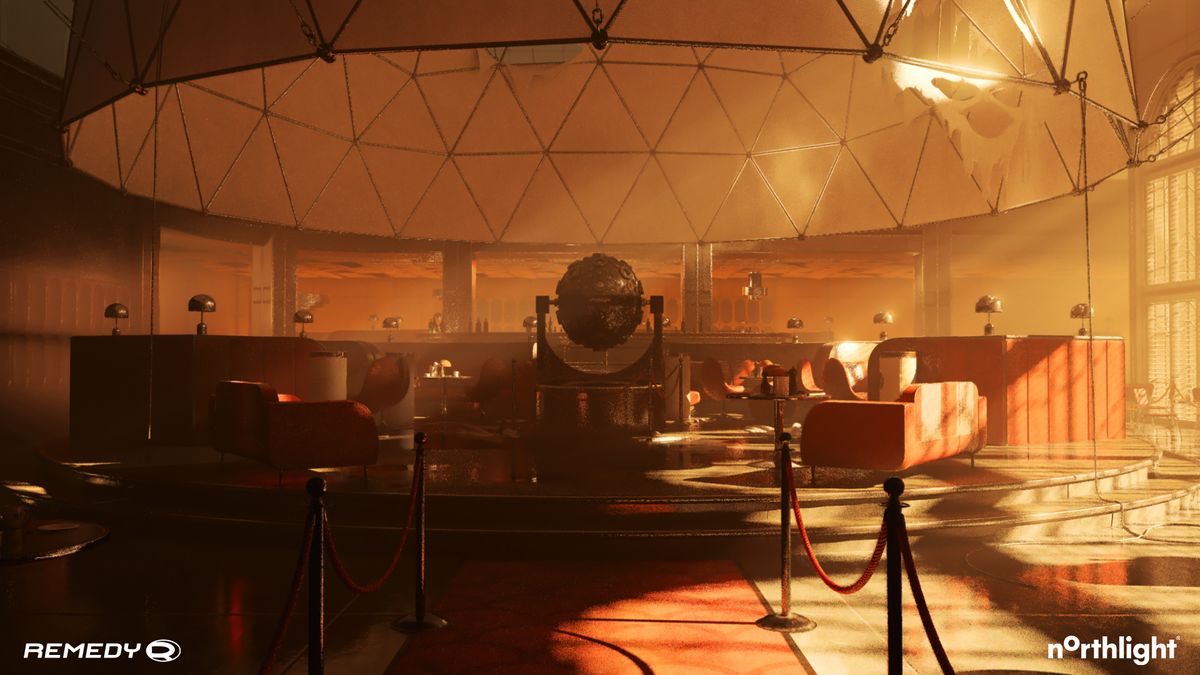
Recent advancements in PC gaming technology have ushered in a new era of visual realism, with ray tracing leading the charge. This powerful rendering technique allows game developers to create stunning and lifelike environments that enhance the overall gaming experience. While ray tracing is not yet ubiquitous across the gaming landscape, its adoption is steadily increasing, with many of the best PC games now supporting this revolutionary technology. In this exploration, we will delve into what ray tracing is, its significance, the reasons for its limited prevalence, and the graphics cards that can effectively utilize this feature.
Ray tracing can be defined as a rendering technique that simulates the way light interacts with objects in a scene, producing incredibly realistic lighting effects. At its core, the algorithm traces the path of light rays as they travel from a light source, bouncing off surfaces and interacting with various materials. This simulation allows for accurate representations of shadows, reflections, translucence, and light scattering. The result is a more immersive and visually striking gaming experience that closely resembles the way the human eye perceives the world.
The importance of ray tracing in gaming cannot be overstated. It elevates 3D graphics by transforming them into lifelike representations, utilizing advanced shaders to display realistic lighting effects. This capability enhances immersion, allowing players to experience game worlds in a way that feels more natural and engaging. For example, in games that support ray tracing, players can observe how light filters through leaves, how reflections appear on water surfaces, and how shadows shift and change with the movement of characters.
Despite its advantages, the adoption of ray tracing across the gaming industry is not yet widespread. One of the primary reasons for this is the heavy computational load that ray tracing demands. Current graphics hardware often struggles to render fully ray-traced games at acceptable frame rates, especially when compared to the high-quality CGI seen in movies and television. However, advancements in technology, particularly in GPUs like Nvidia’s GeForce RTX line, are making it possible for more games to utilize ray tracing effectively.
When considering a graphics card that supports ray tracing, it’s essential to choose one that delivers both high performance and solid frame rates. The Nvidia GeForce RTX 3060 Ti and AMD Radeon RX 6800 XT are excellent options that can provide a smooth gaming experience, maintaining a minimum of 40 frames per second (fps) in most ray-traced games. For those looking for even better ray tracing performance, investing in current-generation GPUs, such as the RTX 4000-Series or RX 7000-Series, is recommended. These cards are designed with powerful architectures that can handle the complex algorithms necessary for rendering beautiful lighting effects while keeping frame rates high.
For context, here’s a comparison of some popular graphics cards and their ray tracing capabilities:
| Graphics Card | Ray Tracing Support | Average FPS (Ray Traced) | Price Range |
|———————|———————|————————–|————-|
| Nvidia RTX 3060 Ti | Yes | 40-60 FPS | $400-$500 |
| AMD RX 6800 XT | Yes | 40-55 FPS | $600-$700 |
| Nvidia RTX 4070 | Yes | 70-90 FPS | $700-$800 |
| AMD RX 7900 XT | Yes | 60-80 FPS | $800-$900 |
As shown in the table, investing in higher-end graphics cards significantly improves performance in ray-traced games, allowing for smoother gameplay and enhanced visuals.
While ray tracing stands out as a groundbreaking technology, other tools can help maintain performance when utilizing this feature. Nvidia has introduced Deep Learning Super Sampling (DLSS), a technology that enhances frame rates while maintaining visual quality. On the other hand, AMD has its equivalent, FidelityFX Super Resolution (FSR). Although FSR has improved considerably, it still lags behind DLSS in terms of performance and efficiency. These technologies enable gamers to enjoy the benefits of ray tracing without sacrificing frame rates, making high-quality visuals more accessible.
Interestingly, some enthusiasts argue that DLSS may be superior to ray tracing itself, as it can significantly boost performance without the heavy demands of fully ray-traced graphics. This perspective highlights the ongoing evolution of gaming technology, where various techniques can complement one another to provide the best possible experience.
In the coming years, it will be fascinating to observe how ray tracing continues to develop and integrate into more games. As hardware becomes increasingly capable, the barrier to entry for ray-traced gaming will lower, allowing more players to experience the stunning visuals that this technology offers. With an ever-growing library of titles embracing ray tracing, the future of gaming looks bright, offering players a chance to immerse themselves in beautifully rendered worlds that feel more alive than ever before.
As we anticipate these advancements, it’s clear that the synergy between ray tracing, DLSS, and other graphical innovations will shape the future of gaming, making realistic and engaging environments not just a possibility but a standard. For gamers eager to stay ahead of the curve, understanding these technologies and their implications will be key to maximizing their gaming experiences.
Leave a Reply